
GRAND-SAHARA-AVENTURES
PRIVATE DAY TRIPS • DESERT TREKS • TUNISIA EXPEDITIONS

WHAT TO DO IN DJERBA?
THE COMPLETE GUIDE TO VISITING THE ISLAND AND SOUTHERN TUNISIA
Djerba is one of Tunisia’s best-known destinations, but also one of the most misunderstood.
Many travellers search for what to do in Djerba and still picture it only as an island of beaches, hotels and seaside resorts.
Yet Djerba offers much more than a classic beach holiday.

From the narrow streets of Houmt Souk to the murals of Djerba Hood, the Ghriba synagogue, the potters of Guellala, traditional markets, fishing ports, the lagoon and the wild sunsets of the western coast, the island offers a wide range of places to discover.
Djerba is also an excellent gateway to Southern Tunisia.
From the island, you can reach the Berber villages of Tataouine and Chenini, the troglodyte houses of Matmata, the dunes of Ksar Ghilane and some of the most scenic desert routes in Tunisia.
For a complete overview of possible tours, you can also visit our page dedicated to private tours from Djerba.
This guide will help you decide what to do in Djerba, whether you are travelling as a couple, with family, with friends or as part of a longer journey through Tunisia.
GUIDE CONTENTS
Djerba has a gentle atmosphere, a pleasant climate and a slow island rhythm.
It is a place best discovered gradually, between whitewashed houses, palm trees, olive groves, souks, beaches, villages and small fishing ports.
Unlike more urbanised destinations, Djerba has preserved a strong local identity.
You can still find lively markets, artisan workshops, traditional cafés, rural mosques, agricultural landscapes and quieter coastal areas away from the main tourist zones.
Djerba is also a very versatile destination.
You can spend a relaxing holiday by the sea, plan cultural visits, enjoy water sports, ride a horse through the lagoon or take a private excursion towards the desert.
In Djerba, you can combine:
-
beaches and relaxation;
-
traditional villages;
-
religious and cultural heritage;
-
water sports;
-
horseback riding, quad biking or camel rides;
-
sunsets on the wild western coast;
-
day trips and desert tours in Southern Tunisia.
This variety is what makes the island so interesting.
Djerba is suitable for a short three-day stay, but also for a full week with time to explore both the island and the mainland.
WHY VISIT DJERBA?
THE BEST PLACES TO VISIT IN DJERBA
Houmt Souk, the lively heart of Djerba

Houmt Souk is the main town of Djerba and one of the best places to begin exploring the island.
Its name literally means “market district”, which perfectly reflects its atmosphere.
You will find shopping streets, local cafés, craft stalls, old fondouks, jewellery shops, souvenir boutiques, a fishing port and several historic sites.
Houmt Souk is ideal for experiencing local life.
In the morning, the streets become lively, shopkeepers open their stores, residents do their shopping and the cafés gradually fill up.
Places to see in Houmt Souk:
-
the central streets;
-
craft shops;
-
traditional cafes;
-
the fishing port;
-
the Ghazi Mustapha fort;
-
the fish market;
-
the fish auction.
Houmt Souk can be visited on its own, but it also works well as part of a wider island tour including Djerba Hood, the Ghriba synagogue, Guellala, the underground mosque and the wild western coast.
The fish market and auction in Houmt Souk

The fish market in Houmt Souk is one of the most authentic experiences in Djerba.
Fresh fish is displayed, sold and sometimes auctioned in a traditional and lively atmosphere.
The place is popular, local and full of movement. Fishermen, restaurant owners, residents and curious visitors gather there in the morning.
It is one of the best places to observe daily life on the island, far from purely tourist areas.
The visit is especially interesting early in the day, when the activity is stronger and the stalls are better supplied.
It is also a good moment for photography and for understanding the island’s connection with the sea.
After the visit, you can continue the experience with grilled fish in Houmt Souk or near the port.
Ghazi Mustapha Fort

Located near the port of Houmt Souk, Ghazi Mustapha Fort, also known as Borj El Kebir, is one of the best-known historic monuments in Djerba.
Its position facing the sea recalls the strategic importance of the island over the centuries.
The visit allows you to discover an old military structure and enjoy a pleasant view over the port and the surrounding area.
It is an easy stop to include during a walk through Houmt Souk and works well with the fish market, the auction and the streets of the old centre.
Djerba Hood, the open-air street-art village

In Erriadh, in the heart of Djerba, Djerba Hood has transformed the streets of a traditional village into an open-air art trail.
In 2014, around 250 murals were created on the village walls as part of a project led by Galerie Itinerrance, already known for major urban art initiatives such as Tour Paris 13.
What makes the site so interesting is the contrast between traditional Djerbian architecture and contemporary street art.
White walls, coloured doors, quiet alleys and large-scale artworks create a very distinctive atmosphere.
Djerba Hood is very suitable for families, photography enthusiasts and travellers who wish to discover a more creative side of the island.
Djerba Hood is now one of the most photographed places on the island.
It appeals to families, photography lovers and travellers looking for a more modern and creative side of Djerba.
The visit can easily be combined with the Ghriba synagogue, located in the same area.
The Ghriba Synagogue, a major heritage site in Djerba
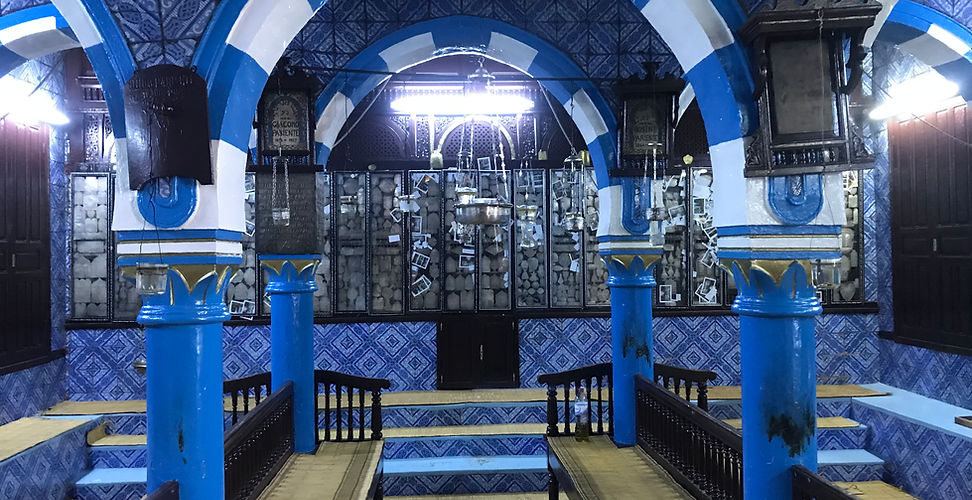
The Ghriba synagogue is one of the most important sites in Djerba, both for its history and for its spiritual meaning.
Located near the village of Erriadh, it is considered the oldest synagogue still in use in Tunisia and Africa.
This site reflects the long-standing presence of the Jewish community in Djerba, one of the last living Jewish communities in the Arab world.
The Ghriba is not just a monument to visit; it is a strong symbol of the island’s cultural and religious diversity.
For visitors, the synagogue is also one of the major cultural attractions in Djerba.
Its architecture, colours, interior details and unique atmosphere make it an essential stop during a discovery of the island.
The visit can easily be combined with Djerba Hood, Houmt Souk, Guellala or a wider island tour.
Guellala, the village of potters

Guellala is the pottery village of Djerba.
For generations, local artisans have worked with clay to produce jars, plates, decorative objects and traditional pottery.
The village offers a living insight into local craftsmanship.
Visitors can explore workshops, watch potters at work and buy handmade pieces.
Guellala is also known for its museum, which presents Djerbian traditions, costumes, scenes of everyday life and the social customs of the island.
What to see in Guellala:
-
pottery workshops;
-
ceramic shops;
-
the Guellala museum;
Guellala is an essential stop for understanding the craftsmanship and traditions of Djerba.
The underground mosque of Djerba
The underground mosque is one of the most unusual visits in Djerba.
Less famous than the island’s main tourist sites, it reveals another side of Djerba’s religious and architectural heritage.
Its discreet, partially buried structure shows how local buildings were adapted to the climate, landscape and traditional uses of the island.
It is a short visit, but a very interesting one for travellers who like to go beyond the classic tourist route.
The underground mosque can be included in a discovery of southern Djerba, together with Guellala, rural landscapes and some of the quieter parts of the island.


Ajim, the port and the atmosphere of western Djerba
Ajim is located on the western side of Djerba.
This port connects the island to the mainland by ferry to Jorf.
The atmosphere is calmer, more local and more raw than in the hotel zones.
It is an interesting area for observing fishing boats, coastal landscapes and the light at the end of the day.
Film lovers may also know Ajim for some locations associated with Star Wars, although most full Star Wars routes continue further into Southern Tunisia.
The wild coast and sunset near Sidi Jmour

For one of the most beautiful sunsets in Djerba, head west towards Sidi Jmour and the island’s wild coast.
Here, the atmosphere changes completely. The landscapes are more open, calmer and sometimes almost desert-like.
The sea, rocks, tracks, small coves and evening light create a very different feeling from the tourist beaches in the north-east.
It is an excellent place for an evening walk, a photo stop or a quiet moment facing the sea.
Sunsets are often spectacular, especially when the sky changes colour above the water.
Sidi Jmour is one of the best places in Djerba for a peaceful and wild atmosphere.
Midoun, markets and local life

Midoun is one of the liveliest towns in Djerba.
Located not far from the main tourist area, it allows visitors to experience local life without travelling too far from the hotels.
Its market is known for fresh produce, spices, clothing, crafts and everyday scenes.
It usually takes place on Thursday afternoon and Friday morning.
Midoun is a good stop for travellers who want to see something different from the beaches
It is also a practical area for organising activities such as quad biking, buggy rides, horse riding, camel rides or trips towards the lagoon.
Djerba is known for its beaches, but they are not all the same.
Some are developed and close to hotels, while others are quieter, wilder or better suited to walking and photography.
Sidi Mahrez Beach, one of the longest beaches in Djerba
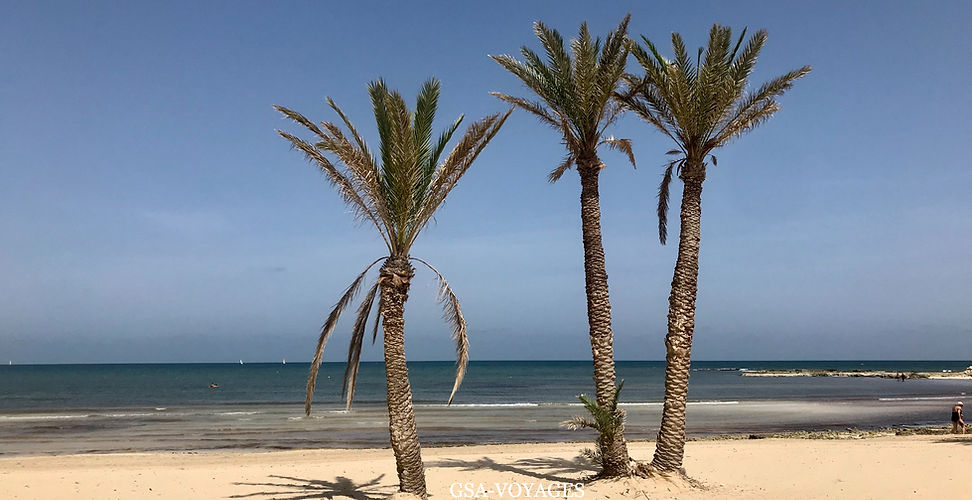
Sidi Mahrez Beach is one of the most famous beaches in Djerba.
It is located in the main tourist area and offers a long stretch of light-coloured sand.
It is a practical beach for families, couples and travellers who want easy access to the sea, water activities and nearby restaurants.
It is also a convenient choice for those staying in hotels along the north-eastern coast.
Seguia Beach, ideal for sunrise

Seguia Beach is one of the pleasant seaside areas of Djerba.
Located on the eastern coast of the island, it is especially enjoyable for travellers who like bright landscapes, long walks by the water and peaceful early mornings.
Thanks to its orientation, Seguia Beach is one of the best places in Djerba to watch the sunrise.
In the morning, the light reflects on the sea, the colours are soft and the atmosphere is much quieter than during the day.
It is also a good place to enjoy the seafront without staying only on a hotel beach.
The area is known for La Lagune restaurant, appreciated for its feet-in-the-water setting.
It is a pleasant address for lunch or a drink facing the sea, in a simple and relaxed atmosphere.
Seguia Beach suits couples, families and travellers looking for a place to combine swimming, walking, photography and a relaxed meal by the water.
Aghir, a quieter beach

Aghir often offers a quieter atmosphere.
It is a good option for travellers looking for a beach that feels less crowded than the main hotel areas.
Depending on the season, the sea can be calm and pleasant for a relaxing day.
The Djerba lagoon

The lagoon is one of the most beautiful natural landscapes in Djerba.
Shallow water, reflections, pale sand and soft light make it a very photogenic place.
It is ideal for a walk, a horse ride, a peaceful moment or a meal by the water.
The atmosphere is especially pleasant towards the end of the day, when the light becomes softer.
The Djerba lagoon is one of the best places for a calm and natural experience, away from the classic beach setting.
THE MOST BEAUTIFUL BEACHES OF DJERBA
Djerba is an easy destination with children. Distances are reasonable, beaches are accessible and several activities are well suited to families.
Djerba Explore and the crocodile farm

Djerba Explore is one of the most visited sites for families.
The park is especially known for its crocodile farm, which often impresses children.
The site also introduces elements of local culture and craftsmanship in an organised setting.
It is a good option for a half-day visit, especially when travelling with younger children.
Camel ride in Djerba

A camel ride is a gentle and accessible activity.
It offers a sense of change of scenery without leaving the island.
Camel rides usually take place near beaches or sandy areas of Djerba.
They are especially popular with families and children.
Horseback riding in the lagoon

Horse riding in the lagoon is one of the most beautiful nature activities in Djerba.
The setting is open, bright and very photogenic.
Depending on the time of day, the experience can feel very different: soft morning light, warmer daytime atmosphere or a romantic mood at sunset.
It is an excellent activity for couples, families with teenagers and travellers who enjoy natural landscapes.
Horseback riding in the lagoon is one of the most photogenic experiences in Djerba.
Boat trip to Flamingo Island

Boat trips to Ras Rmel, often called Flamingo Island, are among the classic activities in Djerba.
They combine the sea, entertainment, swimming and open landscapes.
This activity is especially popular during the tourist season, particularly with families and groups.
WHAT TO DO IN DJERBA WITH THE FAMILY?
Quad biking and buggy rides
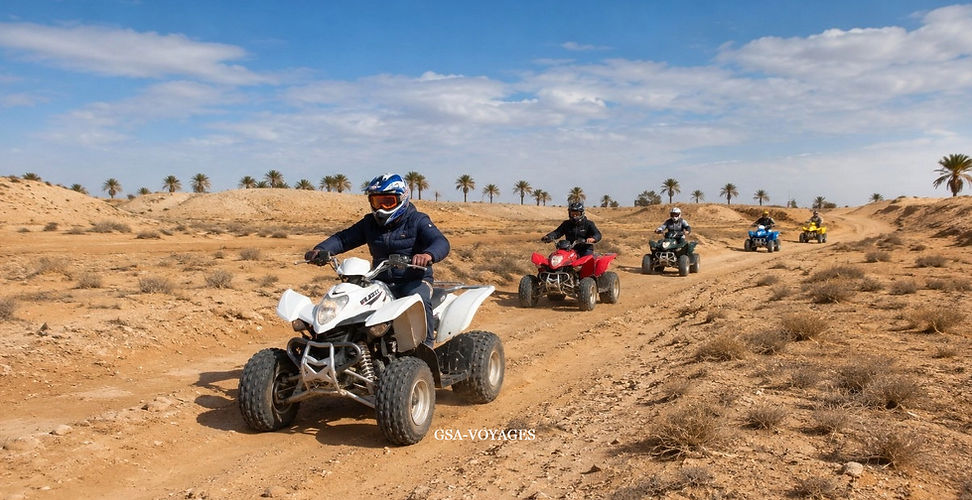
Quad biking and buggy rides allow you to explore tracks, wild beaches and rural landscapes.
These are dynamic activities for travellers who want a little adventure without going far from their hotel.
Tours usually last between one and three hours, depending on the provider and route.
Water sports

Djerba offers several water sports depending on the season: jet skiing, parasailing, paddleboarding, windsurfing and kitesurfing.
The beaches in the tourist area are the most practical places to book these activities. In summer, it is advisable to choose serious and clearly identified providers.
Hammam and wellness

For a quieter day, a traditional hammam or spa treatment is a good option.
It is especially pleasant when the weather is cloudy, after an excursion or towards the end of your stay.
OUTDOOR ACTIVITIES IN DJERBA
WHAT TO DO IN DJERBA WHEN IT RAINS
Although Djerba generally enjoys a sunny climate, some days may be cooler or cloudy. In that case, there are several alternatives to the beach.
Visit the Guellala Museum
The Guellala Museum is one of the most interesting places to visit to understand the history, traditions and deep identity of Djerba.
Located in the potters' village, it does not only present ancient objects: it tells the story of daily life, know-how, ceremonies and customs that have shaped the island over the centuries.
The visit allows you to observe traditional costumes, everyday objects, ancient crafts, wedding scenes, artisanal practices and elements related to Djerbian family life.
This is a valuable step towards better understanding what makes the island so special, beyond the beaches and tourist areas.


Discover the Ghriba Synagogue
The Ghriba synagogue can be visited even when the weather is not ideal.
It's a powerful cultural visit and easy to fit into half a day.
For visitors, the Ghriba is also one of Djerba's major cultural attractions.
Its architecture, colours, interior details and unique atmosphere make it an essential stop when exploring the island.
Explore Houmt Souk
Souks, cafes, shops and covered markets allow you to enjoy the local atmosphere without being entirely dependent on the weather.
What makes Houmt Souk interesting is also its mix of local life, heritage and seaside.
In a few minutes, you can go from the traditional souk to the fish market, then to the port and the Ghazi Mustapha fort.
For travellers who want to understand Djerba beyond the beaches, Houmt Souk is an essential stop, as it shows an inhabited, active island deeply attached to its traditions.


To take a hammam
A hammam is an excellent way to turn a rainy day into a relaxing experience.
It is also a good opportunity to discover a traditional wellness ritual during your stay in Djerba.
Humid heat, black soap, scrub, massage or oil treatment: the experience varies from establishment to establishment, but it remains ideal for relaxing after several days of sightseeing, beach or tour.
In Djerba, several hotels, thalassotherapy centers and spas offer this type of treatment, in a more traditional or more upscale atmosphere depending on your preferences.
WHAT TO DO IN DJERBA IN THE EVENING?
Walk around Houmt Souk
Houmt Souk is pleasant in the evening, especially around the cafés, small shopping streets and port.
The atmosphere becomes softer after the heat of the day, making it a good time for a relaxed walk.
Have dinner by the sea
Fish restaurants and seaside addresses offer a simple and enjoyable evening.
Djerba’s connection with the sea is also reflected in its food, especially grilled fish and seafood dishes.
Watch the sunset near Sidi Jmour
For a more natural evening, the western coast near Sidi Jmour is one of the best choices. The sun sets over the sea, the colours change quickly and the atmosphere becomes very peaceful.
Have dinner and spend an evening at the casino

For a different evening in Djerba, it is possible to combine dinner at a restaurant with a visit to the Djerba casino.
This option is suitable for travellers who want to extend the day in a livelier atmosphere after an excursion, a beach day or a walk through Houmt Souk.
The casino offers a more nocturnal side of the island. You can go for the experience, enjoy a drink, play a few games or simply spend some time in a more elegant adult setting.
It is advisable to bring an ID, dress appropriately and set a reasonable budget in advance if you wish to play.
This activity is for adults only and should remain an occasional form of entertainment during the stay.
WHAT TO EAT IN DJERBA?
Djerba’s cuisine is simple, generous and influenced by the sea, spices and the traditions of Southern Tunisia.

Fish couscous
Fish couscous is one of the emblematic dishes to try in Djerba. It reflects the island’s close connection with the sea and local culinary traditions.
Grilled fish
In restaurants in Houmt Souk, Ajim or along the coast, grilled fish is always a reliable choice.
It is often served simply, allowing the freshness of the fish to remain the main focus.
Brik, ojja and Tunisian dishes
Brik with egg, ojja, Tunisian salads, tabouna bread and local pastries complete the food experience.
HOW MANY DAYS DO YOU NEED TO VISIT DJERBA?
Visiting Djerba in 3 days
Three days are enough to discover the essentials: Houmt Souk, Djerba Hood, the Ghriba synagogue, Guellala, one beach and possibly a short island tour.
Visiting Djerba in 5 days
With five days, you can add a nature activity, a boat trip, a horse ride in the lagoon or a day trip to Tataouine and Chenini.
For a first cultural discovery of the continent, the Tataouine and Chenini day tour from Djerba is one of the most interesting.
Visiting Djerba in 7 days
One week is ideal for combining relaxation, cultural visits, beaches and a tour towards Southern Tunisia.
With seven days on the island, you can plan a full day in the Berber villages or a more desert-oriented experience with a Ksar Ghilane tour from Djerba.

CAN YOU VISIT THE DESERT FROM DJERBA?
Yes. Djerba is one of the best starting points for discovering Southern Tunisia and the first Saharan landscapes.

From the island, you can reach Tataouine, Chenini, Matmata, Douz or Ksar Ghilane. Some trips can be done in one day, while others require two days or more to fully enjoy the desert.
This section remains intentionally concise, as the full details of available programmes are presented on our dedicated page for private tours from Djerba.
Tataouine, Chenini and the Berber region
This trip allows you to discover Berber villages, ksour and the landscapes of the Dahar region. It is one of the most interesting cultural excursions from Djerba.
For more information, see our private tour to Tataouine and Chenini from Djerba.
Ksar Ghilane, the oasis and the desert dunes
Ksar Ghilane is a Saharan oasis known for its hot spring, dunes, camel rides and quad biking.
As a day trip, the drive is long but the experience is memorable. Over two days, it becomes much more immersive, with a night in the desert.
Matmata and Douz
Matmata is known for its troglodyte houses, while Douz opens the way to the large dunes of the Grand Erg Oriental.
For a day focused on the desert, camel riding and troglodyte homes, see our Douz and Matmata tour from Djerba.
Star Wars in Tunisia
Cinema lovers can discover several places linked to Star Wars, especially around Matmata, Ksar Hadada, Medenine, Tozeur and Ong Jmel depending on the duration of the tour.
From Djerba, a first discovery is possible with the Star Wars day trip from Djerba.
Complete Southern Tunisia tour
For travellers who want to discover Berber villages, ksour, oases, Matmata, Douz, Ksar Ghilane and the wider landscapes of Southern Tunisia, a multi-day tour is more suitable.
The 4-day Southern Tunisia private 4x4 tour goes much further than a simple day trip.
SUGGESTED ONE-WEEK ITINERARY IN DJERBA
Day 1: arrival and beach time
Settle in, enjoy a first swim and have a quiet dinner. This first day is best kept simple so you can adapt to the rhythm of the island.
Day 2: Houmt Souk and the fish market
Explore the town centre, the souk, the port, the fish auction and Ghazi Mustapha Fort.
This is a good day to understand local life in Djerba.
Day 3: Erriadh, Djerba Hood and the Ghriba
Spend the day exploring street art, religious heritage and traditional village life.
Day 4: Guellala, the underground mosque and southern Djerba
Discover pottery, the Guellala Museum, the underground mosque and traditional landscapes in the south of the island.
Day 5: lagoon and horse riding
Enjoy a nature-focused day with a horse ride, lunch by the water and sunset light.
Day 6: day trip to Tataouine or Ksar Ghilane
Choose between Berber culture with Tataouine and Chenini, or a first desert experience with Ksar Ghilane.
Day 7: relaxation, shopping and sunset near Sidi Jmour
Keep the final day free for the beach, souvenir shopping and a peaceful ending on the wild western coast.
FAQ – WHAT TO DO IN DJERBA?
What are the best things to see in Djerba?
Houmt Souk
Borj El Kebir
The Ghriba Synagogue
Erriadh and Djerbahood
The Guellala Museum
The beaches of Djerba
Djerba Explore
Midoun, the Fadhloun Mosque
The Midoun market
The Blue Lagoon of Djerba
the underground mosque
the lagoon
Ras Rmel
The wild coast towards Sidi Jmour.
What is the most beautiful beach in Djerba?
Sidi Mahrez is the best-known beach, but the lagoon and some wilder coastal areas offer more natural scenery.
Seguia Beach is also a good option for sunrise, while Aghir is often quieter.
What to do in Djerba with the family?
Djerba Explore, the crocodile farm, camel rides, boat trips, beaches and walks through traditional villages are all suitable for families.
What can you do in Djerba in the evening?
In the evening, you can walk around Houmt Souk, have dinner by the sea, enjoy a restaurant near the lagoon, watch the sunset near Sidi Jmour or spend an evening at the casino.
What can you do in Djerba when it rains?
The Guellala Museum, the Ghriba synagogue, Houmt Souk, traditional cafés, craft shops and hammams are good options when the weather is not ideal.
Can you see the desert from Djerba?
Yes. From Djerba, you can reach the desert landscapes of Southern Tunisia, especially Ksar Ghilane and Douz, in around 3.5 to 4 hours depending on the starting point, stops and route.
What is the closest desert to Djerba?
The closest desert area to Djerba is usually considered to be Ksar Ghilane, an oasis located at the edge of the Sahara and the Grand Erg Oriental.
What tours are possible from Djerba?
From Djerba, you can take several types of tours depending on your available time.
The most popular options are the island tour of Djerba, the Tataouine and Chenini day trip, Ksar Ghilane, Matmata and Douz, as well as Star Wars filming location tours in Tunisia.
For a full overview, visit our page dedicated to private tours from Djerba.
How much does a desert tour from Djerba cost?
For a day trip from Djerba, prices generally range from €60 to €150 per person, depending on the destination, number of travellers and services included.
For a private 2-day desert tour with an overnight stay, the budget is usually around €150 to €200 per person.
This may include private 4x4 transport, a driver-guide, meals, accommodation in a desert camp or bivouac, and selected visits along the route.
How many days do you need to visit Djerba?
Three days are enough to see the essentials.
One week is ideal if you want to enjoy the island, its beaches, villages and one excursion towards Southern Tunisia.
Where can you watch the sunset in Djerba?
The western coast of the island, especially around Sidi Jmour, is one of the best places to watch the sunset in Djerba.
CONCLUSION
Djerba is an island to discover beyond its beaches.
Its villages, markets, traditions, coastal landscapes, lagoon, sunsets and proximity to Southern Tunisia make it a complete destination.
Whether you are looking for a quiet stay, a cultural discovery, family activities or a first desert experience, Djerba offers many possibilities.
To extend your stay, you can also discover our private tours from Djerba to Tataouine, Chenini, Ksar Ghilane, Matmata and the Tunisian Sahara.